Showing 1 – 24 of 52 results

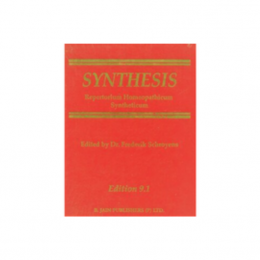
Synthesis - Repertorium Homeopathicum Syntheticum (Edition 9.1) - ed Frederik Schroyens, 2004

Synthesis - Repertorium Homeopathicum Syntheticum (Edition 9.1) - ed Frederik Schroyens, 2004

CA$310.00

Excerpt from Foreword by Jeremy Sherr: Last year I had the privilege of visiting Dr. Frederik Schroyens in his offices in Ghent, Belgium. It was a hive of activity. A constant stream of information poured in - additions, corrections, provings, translations, revisited classics and new manuscripts. Frederik explained the pyramid structure of the organization, how homeopaths from all over the world gathered information, later passing it on to smaller teams who checked and rechecked it until it arrived at the Ghent office where the final sifting, confirming, corroborating, editing, and publishing were performed. I was very impressed. From my own experience of repertorizing, I have learnt to appreciate the enormous time and work that goes into each rubric, remedy, cross reference and annotation. It is the work of ants and a labor of love.

But i was not only the industriousness that impressed me. It was the dedication to detail and accuracy that filled me with a renewed confidence in the repertory. The repertory is our daily tool; it is our right arm, the gateway to materia medica and to healing. On this tool the health of our patients depends, and we must be able to rely on it in the way a carpenter relies on his plane, a soldier on his sword, a baker on his oven, a writer on her pen. It must be sharp and accurate, all-encompassing but not over-inflated. I found the Synthesis to be all these things, and the tool felt right in my hand.  

2214 pages, hard cover

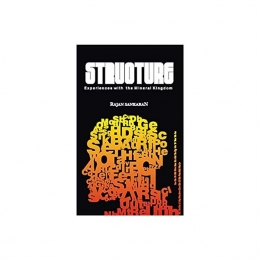
Structure -  Experiences with the Mineral Kingdom, Volume 1 & 2 (2 book set) (Second Edition) - Rajan Sankaran, 2009

Structure - Experiences with the Mineral Kingdom, Volume 1 & 2 (2 book set) (Second Edition) - Rajan Sankaran, 2009

CA$240.00

Homeopathy has evolved from a symptom-based to a systemic approach where each remedy is seen as a  part of a group to which it belongs in nature, rather than as an individual entity. Each patient is guided to explore his innermost experience, or Sensation, where he speaks the language of nature. In order to recognize what language he is speaking, it becomes necessary to know the features of each kingdom and subkingdom in nature. For this purpose it becomes imperative to create a body of work that looks at the Materia Medica from a systematic point of view.
After elaborating on his kingdom idea and the Sensation level, Dr. Rajan Sankaran has been consolidating these with a look into each kingdom. This work is the second of a trilogy on the various kingdoms, the first being ‘An Insight Into Plants’ and the third being ‘Survival’ (on the animal kingdom).

In the case of the Mineral Kingdom, the periodic table readily lends itself to the task of classification. Its seven row and 18 columns can be understood, seen and experienced as stages of human development. Such an understanding leads us to prescribe new remedies with accuracy. Dr. Rajan Sankaran’s recent explorations into the rows, backed by several clinical cases, provings and research, have thrown new light on the Mineral kingdom that makes it significantly easier to recognize the remedies in practice.

1053 pages (combined), hard cover

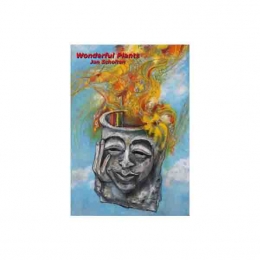
Wonderful Plants - Scholten

Wonderful Plants - Scholten

CA$200.00

After many years of intensive research, Jan Scholten’s long-awaited book on the taxonomy of plants, Wonderful Plants, is now available in English. Jan Scholten’s previous works on the systematic classification of the elements of the periodic table as homeopathic remedies was the greatest breakthrough of the last ten years in homeopathy. His discoveries have been confirmed in thousands of successful cases. Yet, the main thrust of Jan Scholten’s research is not the Mineral but the Plant kingdom. This can easily be seen in the thoroughness and precision of the information offered in his monumental new work.

The same natural laws that can be seen in the series and stages of the periodic table also underlie the taxonomic system of the enormously varied plant families. The path to the required remedy is not as easy to recognize as with the mineral elements – indeed, it is still evolving! One of the timeless values of this work lies in the essences of the plant families.

See also Sense Provings - a companion book to Wonderful Plants - it presents the results of about 200 provings

„To present us the complete pictures of specific plants, families and orders in such a logic and detailed taxonomic system, fitting the problems of our time, is therefore truly a ‘Work’. A more complete and living Materia Medica of the Plant kingdom has never been created before and it could well be The Book of the future of homeopathy.“


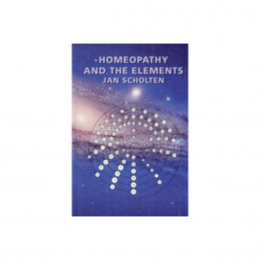
Homoeopathy and the Elements - Jan Scholten, 2007

Homoeopathy and the Elements - Jan Scholten, 2007

CA$170.00

The subject of this book is homeopathy and the elements of the periodic system. The remedy pictures of almost all the elements of the periodic system are described.

The periodic system is a table of all existing elements, the atoms, from Hydrogen to Radon, and of the radioactive elements, such as Uranium and Plutonium. The table has rows and columns in which the elements are grouped. A theory is developed about the use of the periodic system in Homeopathy. This theory shows that every row and every column has a specific theme. The seven rows are called series. The first series, the Hydrogen series, has the theme of coming into being. The second series, the Carbon series, has the theme of the development of the ego. The third series, the Silicum series , shows the theme of relationships. The fourth series, the Iron series, covers the theme of work. The fifth series, the Silver series, has the theme of creativity. The sixth series, the Gold series, shows the theme of the king, the leader.

Each series shows a development: the theme of the series is developed in eighteen stages. These stages, the columns, describe a development: starting a theme, rising, coming to a top, then declining again and in the end comes the loss.

In this theory every element can be described by the concepts of the series and the stage the element is in. A total picture is given of the periodic system as a spiral. Every wind of the spiral is a series or row. And every radiant is a stage or column. The spiral pictures the expanding consciousness: from the consciousness of the Ego in the beginning to that of a neighbourhood, a village, a city, a country and in the end the whole universe.

‘When you have seen that a patient who doubts for years what to do with his life, takes clear decisions suddenly after a dose of Scandium, and also executes them (and has got rid of all kind of fears at the same time), you want to have this book at your desk next to the Repertory.’  - Frans Kusse, SSC, Vol 26, Nr2, 1996.

Excerpt from Foreword: Finding the right remedy is the greatest challenge of homeopathic medicine. It seems that I am stating the obvious. But this isn’t altogether true. The greatest challenge is to admit that you haven’t yet found the remedy you are looking for. One of the greatest eye openers ever was the reverse similars law presented to me by Jan Scholten one day: an unknown picture needs an unknown remedy. A brilliant hint and food for thought for all of us who are involved in homeopathy, for the anxious seeker who is looking for that one remedy that will cure his problem patients, as well as for the complacent ruminator who thinks he has seen it all by now.

A pint of discussion that we frequently encounter is whether homeopathy is an art or a science. This discussion all depends on the theoretical question whether heuristics belong to the domain of science, or whether it should be seen as so called ‘pre scientific procedures’. Heuristics is the methodology of searching. In order to find something new you have to try to find out where to look for it and this is in turn related to your problem-solving urges. In other words, if you accept that the way things are is just fine, then you will never feel the need to look at other horizons. But when you recognize the problem of the status quo, you will go and search for missing links and boundaries that can be shifted.

This book is all about the periodic system. The best introduction to the new ideas presented in this book is to suggest the following exercise. Take a large sheet of paper and draw a grid of 18 vertical columns and 7 horizontal lines and then proceed to fill in the elements in the usual way, starting with Hydrogen, Helium, Lithium, etc.
Next take the most extensive Materia Medica you can find and make a note of the most important rubrics of each element in its appropriate compartment. When you have done that stand back and take a look. You will notice that most of the spaces are empty. Now ask yourself this question: “Why are there so many empty spaces, while others are filled up with polychrests like Ferrum metallicum, Phosphorus, Sulphur, or Aurum metallicum? Are you beginning to get a sense of the problem? You have just asked yourself a very heuristic question. The only step that lies between a question and an answer is ACTION! That is precisely what Jan Scholten did and the result is this book: a Materia Medica of the periodic system. The book that is in front of you right now will enable you to start filling in those empty compartments.

880 pages, hard cover

Mammals - Frans Vermeulen

Mammals - Frans Vermeulen

CA$169.00

Apes & monkeys (8), Armadillos & sloths (5), Badgers, raccoons, skunks, weasels (10), Bats (4), Bears (5), Camels, alpacas, llamas (4), Cat-like carnivores (13), Cows, goats, sheep (20), Deer (9), Dogs, coyotes, foxes, wolves (5), Dolphins & whales (8), Elephants (3), Giraffes (1), Hares & rabbits (3), Horses, donkeys, zebras (5), Hyenas (2), Insectivores (4), Marsupials (3), Meerkats & mongooses (4), Pigs & pig organs (22), Rodents (16), Seals, sea lions, walrus (4), Tapirs (1)

Concordant Reference 2nd ed- Vermeulen

Concordant Reference 2nd ed- Vermeulen

CA$169.00

The world's best single-volume materia medica has been completely revised and updated - for instance, Vermeulen's Concordant Reference now includes ALL of Boericke's remedies precisely indexed and easy to find.

Those who are already familiar with Vermeulen's original Concordant Materia Medica will find the familiar layout of sections, symptom divisions and categories in this new Concordant Reference.

Professional homeopathic practice without the Concordant Reference is inconceivable.


Concordant Reference, published November 2011

   - 1209 remedies in one book!
    - An additional 362 remedies from the classical materia medicas
    - Expanded Sensation, Mind and Dream sections
    - Family Information on Plants, Animals, Fungi, Bacteria and Viruses
    - Chemical Formulas for Mineral and Organic Compounds
    - Standardized Nomenclature with latin names, common names and family groupings
    - Corrected source material information from the author's research
    - Remedies described separately that had been combined in the classical literature
    - More proving symptoms to complement the clinical focus of the previous versions
    - Organized in Boericke's scheme but including material from ten classical authors

Do you, like so many homeopaths, spend your days in and out of Frans Vermeulen's books? If so, then you know that Vermeulen's materia medicas are the most comprehensive single-volume references available. The original Concordant met with instant success on its publication 17 years ago. Now, for the first time in 14 years, this information has been completely revised, expanded and updated.

Concordant Reference represents an extensive sifting and culling of the classical homeopathic materia medica. Remedy source information has been corrected from the original texts. Previously combined remedies, like Rhus toxicodendron and Rhus radicans, have been distinguished and listed separately. More proving symptoms have been included from T.F. Allen's Encyclopedia to complement the mostly clinical information from Hering.

Our lesser known remedies benefit most from Vermeulen's work on Concordant Reference. In particular, dozens of substances previously hidden in the "relationship" sections of Boericke's Pocket Manual have been either indexed or separated into their own listings. Experience shows that small or previously unknown remedies can yield brilliant results. Modern homeopaths will have the opportunity to examine these additional remedies and broaden their use.

Besides the expanded and verified content, the new Concordant Reference reflects recent changes in homeopathic techniques and scientific knowledge. By improving the accuracy of the original material and adding scientific classification, Concordant Reference uses the classical materia medica to build a solid foundation for the modern practice of homeopathy.

The phrase, "classical materia medica," refers to the work done from 1790 - 1931, starting with Hahnemann and ending with Boericke and Boger. Concordant Reference is a one-volume compilation of the following classical materia medicas:

    1) T.F. Allen - Encyclopedia of Pure Materia Medica, 10 volumes (1874 - 1879)
    2) T.F. Allen - A Primer of Materia Medica (1892)
    3) Boericke - Pocket Manual of Homeopathic Materia Medica (1927)
    4) Boger - Synoptic Key of the Materia Medica (1931)
    5) Clarke - Dictionary of Homeopathic Materia Medica, 3 volumes (1900)
    6) Cowperthwaite - Textbook of Materia Medica and Therapeutics (1891)
    7) Hering - Guiding Symptoms, 10 volumes (1877 - 1887)
    8) Kent - Repertory (1877)
    9) A. Lippe - Textbook of Materia Medica (1865)
  10) Pulford - Homeopathic Materia Medica of Graphic Drug Pictures (approx. 1930)

Those who are already familiar with Concordant Materia Medica will find the familiar layout of sections, symptom divisions and categories in Concordant Reference. Each remedy's materia medica is broken down into Generals, Mind, Dreams, Body sections, Modalities, Relations and Causation. The author has broken out sections on Food and Drink, Heart, Limbs in General, Upper Limbs and Lower Limbs for easier reference. Also, each section of the body is further divided into Sensations, Pain and Objective.

Vermeulen has enlarged the Sensation, Mind and Dream sections, reflecting the recent developments in case taking, case analysis and prescribing that have shown to be so effective for today’s homeopath.
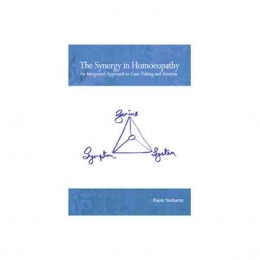
The Synergy In Homoeopathy - An Integrated Approach to Case Taking and Analysis - Rajan Sankaran

The Synergy In Homoeopathy - An Integrated Approach to Case Taking and Analysis - Rajan Sankaran

CA$125.00

Foreword by Dr. Jürgen Hansel  


Traditional Classical Homoeopathy, with symptoms, rubrics and keynotes has stood the test of time. Introduction of newer, more contemporary ideas of kingdom, levels, miasms and sensation have brought Homoeopathy into a new paradigm. Never before has the connection between the patient and the remedy source been as clear.


These contemporary ideas have become very popular and have led to many successful cases. However, enamoured by success with this method, a whole new generation have started using it as a shortcut, and have sometimes neglected traditional knowledge. The profession became split, with conventional and contemporary homoeopathy sharply divided.


The originator of the Sensation Method, Dr. Rajan Sankaran, has always maintained that symptoms and system are two sides of same coin and that success results from an integrated approach. It is like using both the left and right sides of the brain; both the factual and conceptual aspects of the patient and remedy have to be seen together.


The knowledge and understanding found in old masters like C. M. Boger is now explained in detail in this book. Through illustrative cases, Rajan Sankaran demonstrates the secret of success with the integrated approach. Through a seamless blending of the old and new, the symptom and system, conventional and contemporary, the results are proof of a quantum leap in homoeopathic practice.


315 pages, hardcover

The Spirit of Homoeopathy (Third Edition) - Rajan Sankaran, 1999

The Spirit of Homoeopathy (Third Edition) - Rajan Sankaran, 1999

CA$115.00

“For a long time there has been little original writing concerning the theory and practice of Homoeopathy...In Rajan Sankaran’s new book we have something refreshing and interesting, bursting with the ideas of this fabulous Bombay clinician...

The book is divided into four sections: Philosophy, The Mind, Case Taking and Finding the Remedy, and Materia Medica. A number of major themes can be traced throughout the book which is basically an expanded version of lecture notes from the last five years. These unfold as the author tells the story of how his ideas developed, starting with the insight that ‘potentized remedies have dynamic effects only’, and ending with examples of his Situational Materia Medica...

Sankaran is a master detective and, with a great knowledge of the Repertory, he uses the much neglected sections on delusions and dreams in new and imaginative ways, taking a remark of the patient or an observation and translating it into repertory language with great skill. The book is an inspiration for us to ‘free up’ in our use of the Repertory and to consider the meaning behind our patients’ remarks...

In his situational Materia Medica Sankaran puts into imaginative nutshells the basic delusions or unsuitable postures of a number of homeopathic medicines...

There are other ideas in the 44 chapters of Sankaran’s book. I have not mentioned his discussion of compensated and uncompensated symptoms, his use of dreams, his technique of case-taking, or the idea of polarities within a homeopathic medicine. Nor all of these ideas are new, but putting them together into his own framework Sankaran often makes them more memorable and more relevant.”  -British Homeopathic Journal

367 pages, hard cover

From Similia to Synergy - The Evolution of Homeopathy - Rajan Sankaran

From Similia to Synergy - The Evolution of Homeopathy - Rajan Sankaran

CA$110.00

From Similia to Synergy guides the reader through the full spectrum of homœopathic knowledge. Dr Sankaran demonstrates integration with actual case studies. Case-taking discourses have been transcribed and parsed to allow the reader to understand Sankaran’s thought processes. This has been an evolutionary process, described through his various publications spanning The Spirit of Homœopathy to The Synergy in Homoeopathy.


This is a book that will help you produce solid and definite successful results in practice.

474 pages, hardcover (includes 2 DVDs)

The Art of Proving  by Sonya McLeod

The Art of Proving by Sonya McLeod

CA$96.00

Each and every homeopathic remedy contains within itself the ability to heal unique, characteristic signs and symptoms. These characteristic healing symptoms that are contained within each remedy are an unchanging eternal truth that remain constant through space and time. Homeopathic provings are an effective way to experience and interpret the signs and symptoms (i.e. the eternal healing effect) of remedies. Yet it is somewhat puzzling that provers are able to accurately access the remedy state during unconventional provings where no remedy is ingested, such as dream provings, meditative provings and trituration provings. Since discovering trituration provings in 2010, the author has found them to be a deep and extremely accurate way of exploring a remedy’s healing ability. During the process of making the remedy by hand, while triturating the substance with milk sugar, a doorway is opened to what Jungian psychologists call the collective unconscious. The collective unconscious is like a world database of information that each and every living thing on the planet is connected to. Contained within the database of the collective unconscious is the eternal, unchanging truth of the healing ability of each and every homeopathic remedy. Provings are the author’s higher calling, the vehicle through which her soul journeys towards wholeness. So far, Sonya has conducted provings of 14 different remedies over an eight year period and in this beautiful full colour work, nine complete remedy provings including physical, mental and thematic summaries are given for Albino ‘Ghost’ Redwood, Northwestern Crow, Herkimer Diamond, Woad, Wild Horse, Angelite, Black Kyanite, Raccoon and Giant Panda.

Miasms and Nosodes - Origins of Disease – Louis Klein

Miasms and Nosodes - Origins of Disease – Louis Klein

CA$83.00

Louis Klein is one of the leading homeopaths worldwide. His latest book on miasms and nosodes is a ground-breaking pioneer work in the field of homeopathy.
On the basis of his broad clinical experience, Louis Klein attributes many known remedies to miasmatic states. A miasmatic state becomes the core idea around which similar remedies are grouped. For example the Tetanus miasm comprises not only Tetanus nosode, but also remedies like Hypericum, Angustura, Helodrilus, Tellurium. It is clinically linked also with titanic syndromes, spasms or even convulsions. This new classification of miasmatic remedies is highly practical and opens a new chapter in homeopathy, demystifying and redefining the existing miasms, while adding several important new ones. It also introduces new remedies like Johneinum and Helodrilus, which he has proved extensively. So Louis Klein’s work on miasms and nosodes is indeed a homeopathic milestone.
In this first volume Louis Klein presents in-depth information on Burkholderiales including the Pertussis miasm; Clostridiales including the Tetanus miasm; Corynebacteria including the Diptheria miasm; Mycobacteria including the Tubercular and Leprosy miasms, plus the newly proven remedy Johneinum, linked to the Crohn’s disease miasm; Enterobacteriales including the Bach Bowel Nosodes, the Typhoid and Yersinia miasms; and Parasitic Protozoa and Parasitic miasms including the Malarial and Toxoplasmosis miasms.
All this practical information is illustrated throughout with excellent case examples from two decades of homeopathic practice, which speak for themselves. This book is in a class of its own. As Rajan Sankaran is known for plant remedies and Jan Scholten for the periodic table, Louis Klein will be known for miasms and nosodes.
“Nosodes have the aspect of being vague, not precisely defined. Lou Klein has the capacity to work with this vagueness very effectively. He knows how to extract the essence of the remedy from provings, from natural history and especially from patients. He is able to make the vague more exact. This book is the first to do this successfully in homeopathy. I see this book as a must for every homeopath.” – Jan Scholten


526 pages, Hardcover

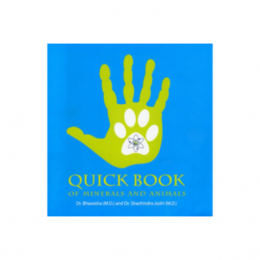
Quick Book of Minerals and Animals - Bhawisha Joshi & Shachindra Joshi

Quick Book of Minerals and Animals - Bhawisha Joshi & Shachindra Joshi

CA$74.00

This is a concise compilation of the work represented by the Joshi's in their seminars and lectures around the globe.

It comprises - a comparative materia medica in a crisp table format, an overview of the minerals in the periodic table, miasms and their comparison and a comparative chart to differentiate the basic traits of smaller groups like fungi, bacteria, sarcodes and nosodes. 

The highlight of this book is the Joshi's most recent development - a new dimenson in homeopathy called 'Mapping Personalities'. This entails comparing different human personalities to different animal types. 

The Joshi's have also done some ground-breaking work, as a by-product of 'Mapping Personalities', comparing animal remedies with mineral remedies.

This work has already been of great help to homeopaths around the globe in solving their difficult and unsolved cases. 

We antiicpate that this book will help you too!

79 pages, soft cover

Homoeopathy and Minerals - Jan Scholten, 1993

Homoeopathy and Minerals - Jan Scholten, 1993

CA$70.00

Review of the book in SSC (the Dutch Homoeopathic Journal) by Frans Kusse:

"When I met the ideas of Jan Scholten for the first time in December 1992, I was surprised: enormous possibilities offered themselves. Now, some months later, having had experiences with these 'new' remedies, I can speak of a fundamental revolution in homeopathic thinking. The method Jan is offering in his book, seems too beautiful to be true, but it works! It is not easy to explain his method briefly, but I shall try to do so with an example from his college in February 1993.
A woman of 30 comes with a variety of complaints, such as allergy to the sun, pain in the right forehead, sciatica right, intestinal troubles, swollen and painful breasts before menses, and fatigue.
Mind: she needs attention, and compliments. 'I didn't dare to ask for attention and got irritated when my husband didn't say anything of my work. My mother had too little time for us and I was the one who managed. I was a big girl'.
The theme of 'attention' is found in the Muriaticums, and the 'timidity' and 'insecurity' in the Calciums. The remedy: Calcium muriaticum ('desire for attention, but not daring to ask for it'). The woman got cured after the remedy.
By analyzing different minerals (Calcarea, Natrum, Phosphorus, Sulphur, Baryta etc.) and metals Jan has developed some key concepts for every element. In practice it is possible to make many combinations of these concepts and so find the remedy that fits the patient.
Try to imagine what it means once we have found the key concepts of every element of the periodic system .... Maybe that is what Kent felt when he said that all remedies could be found in one kingdom (mineral, plant or animal). ...This book gives us the start. We practicing homeopaths now have the job of verifying and expanding this information. A huge task and a fantastic challenge."
"Jan Scholten offers us a fascinating way to review our Materia Medica".
(Lorraine Taylor, in Homeopathic Links, 1994, no 2)
"Jan Scholten has given a brilliant start for an enormous enrichment of our Materia Medica".
(Kees Dam, Simillima, 1993, no 2)
"This book is a must for all homoeopaths and a revelation for all patient that are interested in homoeopathy". 
(Albert van Dinteren, in Homeopathie, 1994, no 2)


295 pages, paperback

The System of Homoeopathy - Rajan Sankaran, 2000

The System of Homoeopathy - Rajan Sankaran, 2000

CA$70.00

The “System” is a book of cases. Using 35 detailed case histories, the ordering criteria that were developed in the “Substance” emerge here even more clearly. The cases are documented using the patient's own words, and the footnotes describe Sankaran's interpretations and his attempts to make sense of the cases.

Printed in India. This book is illustrative of Dr. Rajan Sankaran´s method of case taking, case analysis and follow up. It includes 35 detailed cases and a number of short cases through which emerges a System of Homeopathy. Also hints and guidelines about understanding the mental state, eliciting the mind and body connection, central delusion, what to do and what not to do with dreams etc. Plus a further understanding of miasms and sub-kingdoms.'

494 pages, hardcover

Quickbook of Minerals and Animals - Joshi , Joshi

Quickbook of Minerals and Animals - Joshi , Joshi

CA$69.00

A comparative materia medica in a crisp table format, an overview of the minerals in the periodic table, miasms and their comparison and a comparative chart to differentiate the basic traits of smaller groups like fungi, bacteria, sarcodes and nosodes. The highlight of this book is the Joshis' most recent development-a new dimension in homoeopathy called 'Mapping Personalities'.This entails comparing different human personalities to different animal types.

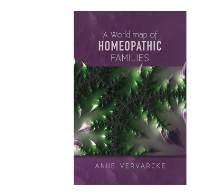
A World Map of Homeopathic Families by Anne Vervarcke

A World Map of Homeopathic Families by Anne Vervarcke

CA$59.00

A World Map of Homeopathic Groups and Families aims to make homeopathic practice manageable again. Unlike the early days of homeopathy and particularly in the last 20 years, homeopathic students and practitioners now have access to a bewildering amount of information - new provings, books, systems and computer programmes all add to an already extensive body of knowledge. But how does the practitioner incorporate all this new data into their work? This book aims to answer this question by guiding us to take a step back from a case for a more 'big picture' view before examining the smaller details. It introduces the concepts of 2D / 3D groups and the Vital Approach Map of Homeopathic Families which Anne likens to a treasure map for the similimum. Practitioners will learn how to identify clear pointers for the bigger groups and families, what other key information to look for in a case, how to connect the dots and recognise patterns leading to more efficient prescribing and improved outcomes. Anne's straightforward approaches are beautifully presented in this book. Through them we gain not only a broader perspective but also deeper understanding that allows our homeopathic practice to be taken to a whole new level.

Homeopathy in Healthcare - Effectiveness, Appropriateness, Safety, Cost - Bornhoft, Matthiessen

Homeopathy in Healthcare - Effectiveness, Appropriateness, Safety, Cost - Bornhoft, Matthiessen

CA$50.00

This volume includes the full Health Technology Assessment (HTA) report on effectiveness, appropriateness, safety and costs of homoeopathy in health care. The report was commissioned by the Swiss health authorities to inform decision-making on the further inclusion of homoeopathy in the list of services covered by statutory health insurance. Other studies carried out as part of the Swiss Complementary Medicine Evaluation Programme (PEK) caused a massive stir due to their schematic and exclusively quantitative (negative-)outcomes for homoeopathy.
The present report, in contrast, offers a differentiated evaluation of the practice of homoeopathy in health care. It confirms homoeopathy as a valuable addition to the conventional medical landscape - a status it has been holding for a long time in practical health care.

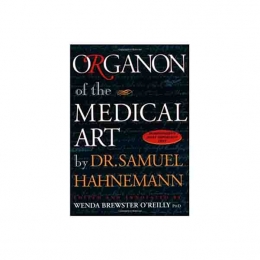
Organon of the Medical Art - Dr Samuel Hahnemann (Translation by Wenda B O'Reilly), 1996

Organon of the Medical Art - Dr Samuel Hahnemann (Translation by Wenda B O'Reilly), 1996

CA$45.00

Dr. Samuel Hahnemann, the visionary 19th century physician who first developed homeopathic medicine, distilled his philosophy and practice into the Organon of the Medical Art. This definitive new edition clearly presents his revolutionary system of medical care.
“One of the most important books ever written on homeopathy and holistic medicine.” – Andrew Weil, M.D., Author of Natural Health, Natural Medicine
“This philosophical masterpiece by the founder of homeopathy brilliantly covers all aspects of natural health care.” – Miranda Castro, Author of The Complete Homeopathy Handbook
“This superb edition of the Organon enables Hahnemann’s genius to spread beyond the confines of the homeopathic community – to all who are interested in discovering a gentle, safe, and effective method of healing.” – Catherine Coulter, Author of Portraits of Homeopathic Medicine
“Homeopathic medicine is the most radical and effective system of medicine the world has ever known. Although the Organon was written 200 years ago, it is only now, at the dawn of the 21st century, that its true relevance can be appreciated by all.” – Jeremy Sherr, Director, The Dynamis School of Homeopathy
“The Organon of the Medical Art is a must read for anyone who gives or receives medical care.” – Roger Morrison, M.D., Author of Desktop Companion to Physical Pathology


407 pages, paperback

The Homeopathic Treatment of Children: Pediatric Constitutional Types – Paul Herscu

The Homeopathic Treatment of Children: Pediatric Constitutional Types – Paul Herscu

CA$45.00

`There is at present a great necessity for information on the homeopathic treatment of children. We do not actually have enough literature on the subject apart from Borland`s booklet which is quite good but not sufficient for the needs of our time. I feel that Paul Herscu`s book goes further than any other homeopathic book in giving detailed information which will be very useful to any practitioner who treats children.`` - George Vithoulkas, internationally respected teacher of homeopathy and author of The Science of Homeopathy and Homeopathy: Medicine for the New Man


``I was very impressed with the careful and thorough treatment that Dr. Herscu gives each remedy. This is a book which will be extremely useful for any serious student or practitioner of homeopathy. I will highly recommend your book to all my colleagues and students.`` - Roger Morrison, MD, DHt, Founder and Senior Instructor, Hahnemann College of Homeopathy


``Dr. Herscu`s work is the first modern pediatric materia medica. This book represents a significant step forward in helping the practitioners who treat children to understand the importance of seeing the integration of body and mind, the developmental aspects of each, and their manifestation in health and disease. This book will greatly aid my pediatric practice, for his writings enabled me to see, hear, smell, taste and experience each of the major childhood constitutional types.`` - Richard Solomon MD, Assistant Professor, Medical College of Pennsylvania, Allegheny General Hospital


``This book is a compelling description and impressively practical guide to the use of homeopathic medicines in treating underlying health problems in children. Herscu`s clear and vivid depictions of the constitutional types will help anyone understand children more deeply and help to cure them more completely.`` - Kenneth P. Stoller, MD, Fellow of the American Academy of Pediatrics.


374 pages, paperback

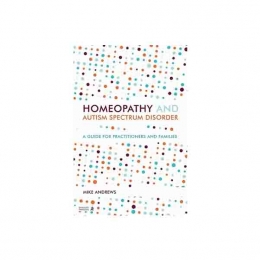
Homeopathy and Autism Spectrum Disorder - Andrews

Homeopathy and Autism Spectrum Disorder - Andrews

CA$41.00

Homeopathy can be an effective way to manage aggression, improve physical health problems and enhance overall wellbeing in people with Autism Spectrum Disorder (ASD). This book presents the clinical experiences of homeopaths working with autism around the world, exploring the real clinical outcomes that are being achieved in practice. It will be compelling reading for homeopaths, other healthcare professionals, teachers, parents and all those who come in to contact with children and adults with Autism Spectrum Disorder.

Homeopathic Prescribing (2nd ed.) - Steven B Kayne, Lee Kayne

Homeopathic Prescribing (2nd ed.) - Steven B Kayne, Lee Kayne

CA$40.00

 Homeopathic Practice offers an overview about homeopathic experience in different parts of the world and from different practising perspectives.

Edited by Steven B Kayne

Homeopathic Practice uniquely approaches the subject of homeopathy by demonstrating how the theoretical principles underpinning practice directly translate to day-to-day practice.

Contributions from international experts highlight how homeopathy is practised in a variety of different environments around the world. Case studies and personal accounts demonstrate the wide breadth of involvement in homeopathic practice.

Contents include:
- homeopathic theory and the need for an evidence base
- homeopathic drug provings and the Materia Medica
- the production and use of homeopathic medicines
- use of homeopathy by different healthcare providers working
- in a variety of global settings.

Homeopathic Practice is a source of inspiration and reflection, as well as of reference. It will be of interest to healthcare providers who wish to widen their scope of practice and to people with a keen interest in homeopathy.

360 pages, paperback