The Synergy In Homoeopathy - An Integrated Approach to Case Taking and Analysis - Rajan Sankaran

The Synergy In Homoeopathy - An Integrated Approach to Case Taking and Analysis - Rajan Sankaran

CA$125.00

Foreword by Dr. Jürgen Hansel  


Traditional Classical Homoeopathy, with symptoms, rubrics and keynotes has stood the test of time. Introduction of newer, more contemporary ideas of kingdom, levels, miasms and sensation have brought Homoeopathy into a new paradigm. Never before has the connection between the patient and the remedy source been as clear.


These contemporary ideas have become very popular and have led to many successful cases. However, enamoured by success with this method, a whole new generation have started using it as a shortcut, and have sometimes neglected traditional knowledge. The profession became split, with conventional and contemporary homoeopathy sharply divided.


The originator of the Sensation Method, Dr. Rajan Sankaran, has always maintained that symptoms and system are two sides of same coin and that success results from an integrated approach. It is like using both the left and right sides of the brain; both the factual and conceptual aspects of the patient and remedy have to be seen together.


The knowledge and understanding found in old masters like C. M. Boger is now explained in detail in this book. Through illustrative cases, Rajan Sankaran demonstrates the secret of success with the integrated approach. Through a seamless blending of the old and new, the symptom and system, conventional and contemporary, the results are proof of a quantum leap in homoeopathic practice.


315 pages, hardcover

From Similia to Synergy - The Evolution of Homeopathy - Rajan Sankaran

From Similia to Synergy - The Evolution of Homeopathy - Rajan Sankaran

CA$110.00

From Similia to Synergy guides the reader through the full spectrum of homœopathic knowledge. Dr Sankaran demonstrates integration with actual case studies. Case-taking discourses have been transcribed and parsed to allow the reader to understand Sankaran’s thought processes. This has been an evolutionary process, described through his various publications spanning The Spirit of Homœopathy to The Synergy in Homoeopathy.


This is a book that will help you produce solid and definite successful results in practice.

474 pages, hardcover (includes 2 DVDs)

Lisa and the Mystery of the Little White Globules- Wichmann

Lisa and the Mystery of the Little White Globules- Wichmann

CA$18.00

What exactly is homoeopathy and how does it work? 
Patients of all ages, who have experienced help through this healing method, would like to have these questions answered. – There are many volumes of literature available to the grown ups among them to find information and form their own opinion.
Yet it is difficult to find any material on homoeopathy suitable for children. This book, specifically written for children of primary school age, tries to do this with the help of a little story. This booklet contains many vivid pictures and can either be read to the children, or by the children themselves. 
It answers the most important questions about homoeopathy in an understandable and appropriate way.


"The story is light in tone, but covers many areas, showing that homeopathy can work on animals as easily as on humans. In a disarmingly simple sentence the homeopathic globules are likened to “little memory cards in a computer. They store what healing properties there are in a plant. And our body is able to read it.” This is Lisa’s insight. She later goes on to unravel the mystery of how the remedies are made, and starts her own research project, with Fiona."

How Aphorism 27 Changed the World- Bentley

How Aphorism 27 Changed the World- Bentley

CA$35.00

The Organon of Medicine by Samuel Hahnemann contains a treasure of information about every aspect of homeopathy, including Hahnemann's views on best practice and how homeopathy works.

Grant Bentley examines aspects of The Organon in reference to contemporary practice, with focus on its place in relation to scientific thought and universal principles. Through examining natural laws, the author highlights the important strengths of the foundations of homeopathy, while also indicating some aspects of Hahnemannian thinking that are open to new interpretation, in the light of a further 200 years of practice.

Building upon the author's clinical use of natural law in determining miasmatic dominance, How Aphorism 27 Changed The World is an important addition to the homeopathic library.

Grant Bentley has written three other homeopathic books -Appearance and Circumstance, Homeopathic Facial Analysis and Soul & Survival. His methodology Homeopathic Facial Analysis (HFA) is practiced around the world. Grant is a homeopathic practitioner, teacher and scholar, and is currently the principal lecturer of the Victorian College of Classical Homeopathy in Melbourne, Australia.

Homeopathy in Healthcare - Effectiveness, Appropriateness, Safety, Cost - Bornhoft, Matthiessen

Homeopathy in Healthcare - Effectiveness, Appropriateness, Safety, Cost - Bornhoft, Matthiessen

CA$50.00

This volume includes the full Health Technology Assessment (HTA) report on effectiveness, appropriateness, safety and costs of homoeopathy in health care. The report was commissioned by the Swiss health authorities to inform decision-making on the further inclusion of homoeopathy in the list of services covered by statutory health insurance. Other studies carried out as part of the Swiss Complementary Medicine Evaluation Programme (PEK) caused a massive stir due to their schematic and exclusively quantitative (negative-)outcomes for homoeopathy.
The present report, in contrast, offers a differentiated evaluation of the practice of homoeopathy in health care. It confirms homoeopathy as a valuable addition to the conventional medical landscape - a status it has been holding for a long time in practical health care.

Sense Provings - Jan Scholten

Sense Provings - Jan Scholten

CA$26.00

This book is a companion to Wonderful Plants. It presents the results of about 200 provings performed in the course of many years. They form part of the base on which the plant theory has been been build. Many plants from families little known or unknown in homeopathy are giving their pictures in these provings. A wealth of information.

A theory of provings gives an insight into the several formats of provings, their value, strength, weakness and essence.


Introduction:

Companion of Wonderful Plants
This book is a companion of the book "Wonderful Plants", where the Plant theory is described. My original idea was to publish the proving in this book in the Wonderful plant book. But gradually that gave more problems. The proving take up much space and Wonderful Plants would have become thicker and heavier. A second objection is that the provings, especially the long ones like the picture proving disrupt the flow of the Wonderful plant book. Therefore I decided to place the proving in a separate book., the book Sense proving. It is meant as a reference book for further study.

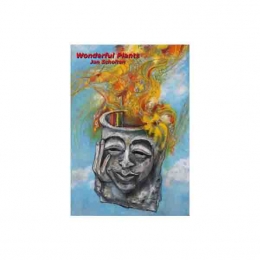
Wonderful Plants - Scholten

Wonderful Plants - Scholten

CA$200.00

After many years of intensive research, Jan Scholten’s long-awaited book on the taxonomy of plants, Wonderful Plants, is now available in English. Jan Scholten’s previous works on the systematic classification of the elements of the periodic table as homeopathic remedies was the greatest breakthrough of the last ten years in homeopathy. His discoveries have been confirmed in thousands of successful cases. Yet, the main thrust of Jan Scholten’s research is not the Mineral but the Plant kingdom. This can easily be seen in the thoroughness and precision of the information offered in his monumental new work.

The same natural laws that can be seen in the series and stages of the periodic table also underlie the taxonomic system of the enormously varied plant families. The path to the required remedy is not as easy to recognize as with the mineral elements – indeed, it is still evolving! One of the timeless values of this work lies in the essences of the plant families.

See also Sense Provings - a companion book to Wonderful Plants - it presents the results of about 200 provings

„To present us the complete pictures of specific plants, families and orders in such a logic and detailed taxonomic system, fitting the problems of our time, is therefore truly a ‘Work’. A more complete and living Materia Medica of the Plant kingdom has never been created before and it could well be The Book of the future of homeopathy.“


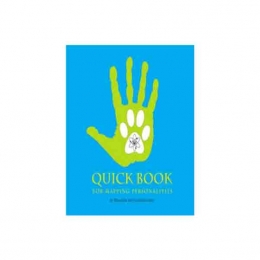
Quick Book of Minerals and Animals - Bhawisha Joshi & Shachindra Joshi

Quick Book of Minerals and Animals - Bhawisha Joshi & Shachindra Joshi

CA$74.00

This is a concise compilation of the work represented by the Joshi's in their seminars and lectures around the globe.

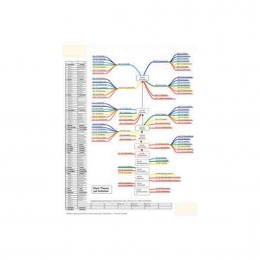
It comprises - a comparative materia medica in a crisp table format, an overview of the minerals in the periodic table, miasms and their comparison and a comparative chart to differentiate the basic traits of smaller groups like fungi, bacteria, sarcodes and nosodes. 

The highlight of this book is the Joshi's most recent development - a new dimenson in homeopathy called 'Mapping Personalities'. This entails comparing different human personalities to different animal types. 

The Joshi's have also done some ground-breaking work, as a by-product of 'Mapping Personalities', comparing animal remedies with mineral remedies.

This work has already been of great help to homeopaths around the globe in solving their difficult and unsolved cases. 

We antiicpate that this book will help you too!

79 pages, soft cover

About Potencies- Plouvier-Suijs Margot

About Potencies- Plouvier-Suijs Margot

CA$28.00

Here you see the result of a great and thorough work: an important book in homeopathy’s growth to maturity.

Margriet Plouvier has created an extremely workable overview of the functioning of different potencies by systematically and logically arranging her observations of the therapeutic effect after prescriptions. This is a great support when we try to choose the appropriate potency for a case.There are many theories about the use of the best potency, but until now it is more tradition and conviction that are determinative instead of systematic research. Being the pharmacist of a homeopathic pharmacy, I see many recipes every day; so I have an overview of many prescriptions. I also have knowledge of clinical and fundamental research in homeopathy: this research doesn’t show any useful difference of result between D, C, K, or LM potencies.Very little study has been done into the exact differences in functioning between the several potency-systems. It is impossible to have a preference based on clinical and fundamental research. Nevertheless I notice that doctors and therapist have their strong personal preferences. This book shows the corresponding effect of potencies from different potency- systems.

The question is: what is most important? Is the difference in effect of the several potencies secondary to the choice of the simillimum in the potency appropriate to the case?

Concordant Reference 2nd ed- Vermeulen

Concordant Reference 2nd ed- Vermeulen

CA$169.00

The world's best single-volume materia medica has been completely revised and updated - for instance, Vermeulen's Concordant Reference now includes ALL of Boericke's remedies precisely indexed and easy to find.

Those who are already familiar with Vermeulen's original Concordant Materia Medica will find the familiar layout of sections, symptom divisions and categories in this new Concordant Reference.

Professional homeopathic practice without the Concordant Reference is inconceivable.


Concordant Reference, published November 2011

   - 1209 remedies in one book!
    - An additional 362 remedies from the classical materia medicas
    - Expanded Sensation, Mind and Dream sections
    - Family Information on Plants, Animals, Fungi, Bacteria and Viruses
    - Chemical Formulas for Mineral and Organic Compounds
    - Standardized Nomenclature with latin names, common names and family groupings
    - Corrected source material information from the author's research
    - Remedies described separately that had been combined in the classical literature
    - More proving symptoms to complement the clinical focus of the previous versions
    - Organized in Boericke's scheme but including material from ten classical authors

Do you, like so many homeopaths, spend your days in and out of Frans Vermeulen's books? If so, then you know that Vermeulen's materia medicas are the most comprehensive single-volume references available. The original Concordant met with instant success on its publication 17 years ago. Now, for the first time in 14 years, this information has been completely revised, expanded and updated.

Concordant Reference represents an extensive sifting and culling of the classical homeopathic materia medica. Remedy source information has been corrected from the original texts. Previously combined remedies, like Rhus toxicodendron and Rhus radicans, have been distinguished and listed separately. More proving symptoms have been included from T.F. Allen's Encyclopedia to complement the mostly clinical information from Hering.

Our lesser known remedies benefit most from Vermeulen's work on Concordant Reference. In particular, dozens of substances previously hidden in the "relationship" sections of Boericke's Pocket Manual have been either indexed or separated into their own listings. Experience shows that small or previously unknown remedies can yield brilliant results. Modern homeopaths will have the opportunity to examine these additional remedies and broaden their use.

Besides the expanded and verified content, the new Concordant Reference reflects recent changes in homeopathic techniques and scientific knowledge. By improving the accuracy of the original material and adding scientific classification, Concordant Reference uses the classical materia medica to build a solid foundation for the modern practice of homeopathy.

The phrase, "classical materia medica," refers to the work done from 1790 - 1931, starting with Hahnemann and ending with Boericke and Boger. Concordant Reference is a one-volume compilation of the following classical materia medicas:

    1) T.F. Allen - Encyclopedia of Pure Materia Medica, 10 volumes (1874 - 1879)
    2) T.F. Allen - A Primer of Materia Medica (1892)
    3) Boericke - Pocket Manual of Homeopathic Materia Medica (1927)
    4) Boger - Synoptic Key of the Materia Medica (1931)
    5) Clarke - Dictionary of Homeopathic Materia Medica, 3 volumes (1900)
    6) Cowperthwaite - Textbook of Materia Medica and Therapeutics (1891)
    7) Hering - Guiding Symptoms, 10 volumes (1877 - 1887)
    8) Kent - Repertory (1877)
    9) A. Lippe - Textbook of Materia Medica (1865)
  10) Pulford - Homeopathic Materia Medica of Graphic Drug Pictures (approx. 1930)

Those who are already familiar with Concordant Materia Medica will find the familiar layout of sections, symptom divisions and categories in Concordant Reference. Each remedy's materia medica is broken down into Generals, Mind, Dreams, Body sections, Modalities, Relations and Causation. The author has broken out sections on Food and Drink, Heart, Limbs in General, Upper Limbs and Lower Limbs for easier reference. Also, each section of the body is further divided into Sensations, Pain and Objective.

Vermeulen has enlarged the Sensation, Mind and Dream sections, reflecting the recent developments in case taking, case analysis and prescribing that have shown to be so effective for today’s homeopath.
Homeopathy and Autism Spectrum Disorder - Andrews

Homeopathy and Autism Spectrum Disorder - Andrews

CA$41.00

Homeopathy can be an effective way to manage aggression, improve physical health problems and enhance overall wellbeing in people with Autism Spectrum Disorder (ASD). This book presents the clinical experiences of homeopaths working with autism around the world, exploring the real clinical outcomes that are being achieved in practice. It will be compelling reading for homeopaths, other healthcare professionals, teachers, parents and all those who come in to contact with children and adults with Autism Spectrum Disorder.

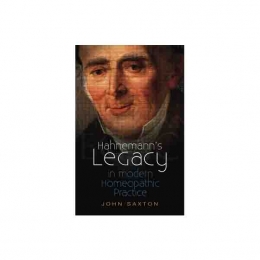
Hahnemann's Legacy in Modern Homeopathic Practice - Saxton

Hahnemann's Legacy in Modern Homeopathic Practice - Saxton

CA$28.00

Modern homeopathic practice, whilst moving into new and exciting areas, is still based on the three great works of Hahnemann - the Organon, Chronic Diseases and Materia Medica Pura.

Yet these pillars of practice are themselves based on the years of doubts, observation, thoughts and experimentation which are revealed in Hahnemann's other writings and letters. To fully understand and utilise the modern developments, it is necessary to appreciate where the true roots of modern homeopathy lie.

Many of the problems facing homeopathy today were also faced by Hahnemann and his followers. This book will examine the growth of homeopathy within the context of Hahnemann's legacy that continues to inform today's practitioners and guide the development of their practice.

Quickbook of Minerals and Animals - Joshi , Joshi

Quickbook of Minerals and Animals - Joshi , Joshi

CA$69.00

A comparative materia medica in a crisp table format, an overview of the minerals in the periodic table, miasms and their comparison and a comparative chart to differentiate the basic traits of smaller groups like fungi, bacteria, sarcodes and nosodes. The highlight of this book is the Joshis' most recent development-a new dimension in homoeopathy called 'Mapping Personalities'.This entails comparing different human personalities to different animal types.

Costa Rica Provings - Scholten

Costa Rica Provings - Scholten

CA$30.00

Costa Rica proving describes the fifth proving seminar in Costa Rica. It turns out that the proving are getting better over the years. The quality of the proving is becoming more accurate and the essence of the remedy is discovered amore or less broadly. The provers get the Remedy code partially or totally from the proving. The Remedy code is the code as developed in the Plant theory which has been published in Wonderful plants. It is astonishing how accurate they often find the Remedy code, partially or totally. The proving show often new aspect of the remedy or family to which it belongs. In these proving the two remedies from the Piperaceae showed strongly the aspect of the neglect child, but then in a more general way. It showed that the western culture of laying babies in their own bed, far away from the parents is a cultural problem, reflected in the Piperaceae.

Kenton Provings - Scholten

Kenton Provings - Scholten

CA$26.00

This is a report of the provings done on 19 species of plants in Kenton on sea, South Africa. The provings were done in the week of 2 to 8 October 2012. The species taken were growing on the region of Kenton on sea, mostly indiginous. The species were selected with the idea of developing new remedies from families that till now are less known or completely unknown.

Menno-Nightcaps by S.L. Klassen

Menno-Nightcaps by S.L. Klassen

CA$26.00

A satirical cocktail book featuring seventy-seven cocktail recipes accompanied by arcane trivia on Mennonite history, faith, and cultural practices. At last, you think, a book of cocktails that pairs punny drinks with Mennonite history! Yes, cocktail enthusiast and author of the popular Drunken Mennonite blog Sherri Klassen is here to bring some Low German love to your bar cart. Drinks like Brandy Anabaptist, Migratarita, Thrift Store Sour, and Pimm’s Cape Dress are served up with arcane trivia on Mennonite history, faith, and cultural practices. Arranged by theme, the book opens with drinks inspired by the Anabaptists of sixteenth-century Europe (Bloody Martyr, anyone?), before moving on to religious beliefs and practices (a little like going to a bar after class in Seminary, but without actually going to class). The third chapter toasts the Mennonite history of migration (Old Piña Colony), and the fourth is all about the trappings of Mennonite cultural identity (Singalong Sling). With seventy-seven recipes, ripping satire, comical illustrations, a cocktails-to-mocktails chapter for the teetotallers, and instructions on scaling up for barn-raisings and funerals, it’s just the thing for the Mennonite, Menno-adjacent, or merely Menno-curious home mixologist.